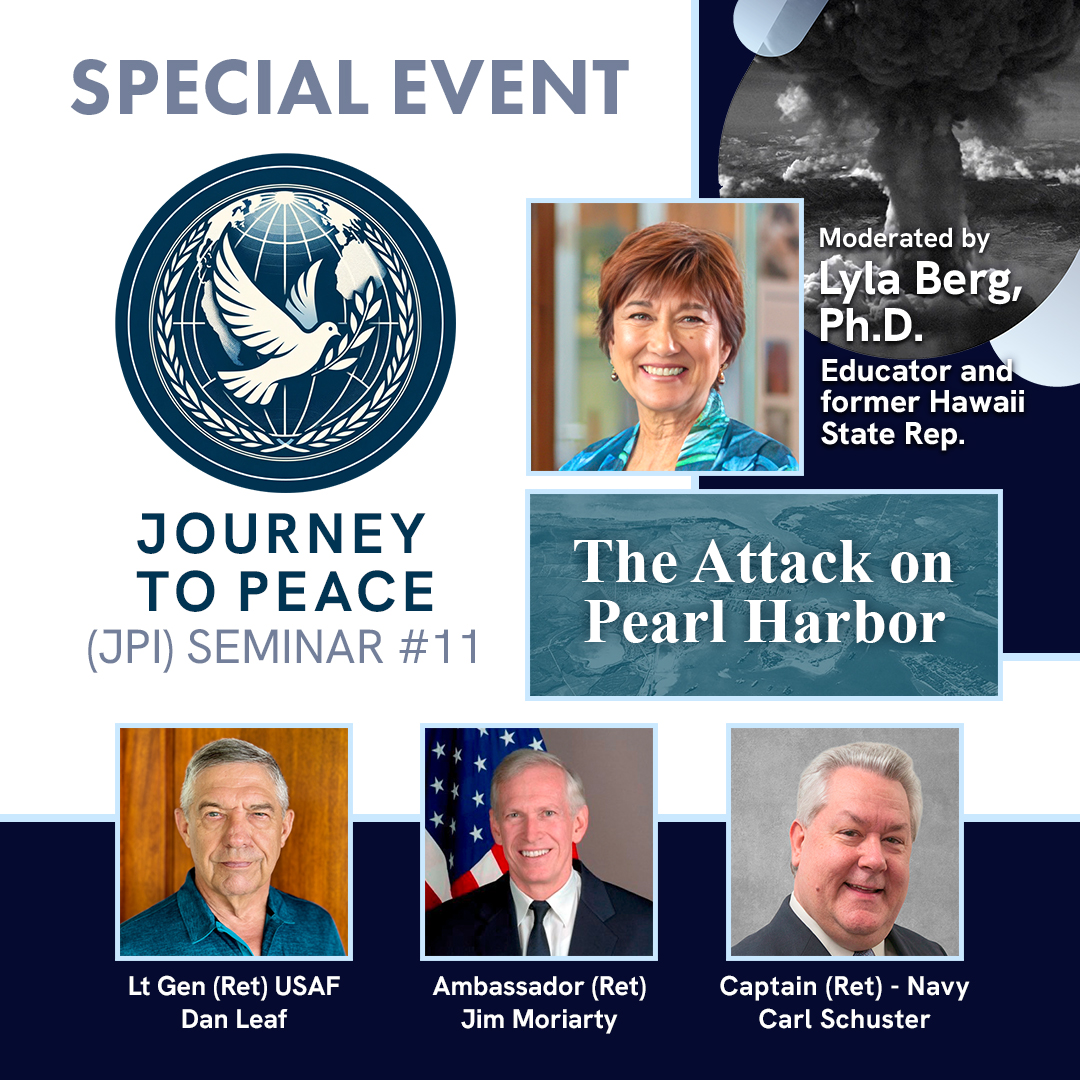
Journey to Peace – The Attack on Pearl Harbor
On December 7, 1941, Japan’s surprise attack on Pearl Harbor capped decades of escalating conflict: a war in China, an American embargo on oil and steel, and negotiations that ran out of time. Eighty-five years later, on the ground where it happened, our panel asks whether a diplomatic solution was still possible, whether the United States could have used its diplomatic, informational, military, and economic power more effectively, why Japan believed the attack would weaken American resolve rather than unite the nation, and what those lessons mean for the Indo-Pacific today.
Bring a question; the panel answers live.
What the seminar will explore:
- The road to war, 1931 to 1941: Manchuria, the war in China, the Tripartite Pact, and the oil embargo that pushed Tokyo toward war.
- The intelligence failures: a consulate spy’s “bomb plot” message that was intercepted but misread, a radar warning from Opana that was dismissed, and Army and Navy commands that never shared a picture.
- The gamble: why Tokyo believed a strike on the fleet would buy time, and why it united the nation instead.
Applications for today, followed by an extended audience Q&A