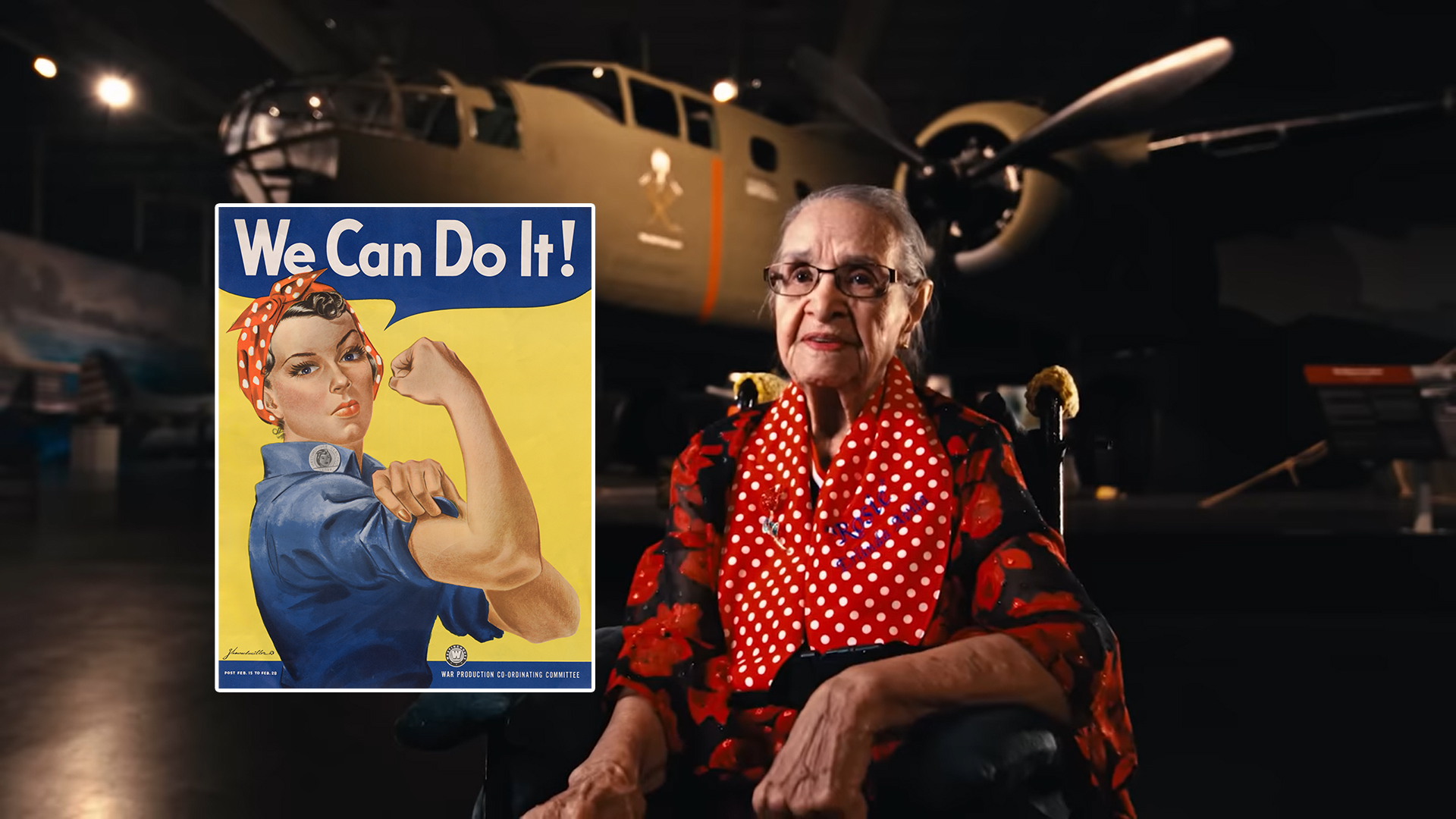

Erlinda Gallego Ávila: The “Rosie” Who Worked Inside the Wing
By Pearl Harbor Aviation Museum, a story collaboration with Beyond the Call and Black Rifle Coffee Company.
On 7 December 1941, Erlinda Gallego Ávila of Flagstaff, Arizona, was dancing to the Glenn Miller Orchestra with her sister when a news bulletin suddenly interrupted the radio program. Japanese aircraft had attacked Pearl Harbor. As a teenager, Erlinda didn’t know what that meant at the time, but she watched her mother and neighbors cry and rush to the church. That moment marked the beginning of America’s entry into World War II.
Erlinda, eager to help, went to a recruiting office at just 15. When the recruiter told her, “We don’t take women,” Erlinda replied, “Well, I’m not a woman. I’m a girl.” Denied a military uniform, she found another way to serve by joining the war effort in industrial work. She enrolled in a program at Phoenix Union High School District, learning aircraft production skills like riveting, bucking, and other precision work.
Not provided tools, Erlinda borrowed $25 against her sister’s wristwatch to buy goggles and bucking bars. Soon, she was sent to Goodyear, Arizona, to work on North American B-25 Mitchell bombers. Inside the aircraft, Erlinda worked on the port (left) wing, bucking rivets by hand while another young woman worked on the starboard (right) wing. Rivets, which held the bomber together, were driven from the outside, while Erlinda sat inside, securing them with precision.
“The rivets are the buttons of a bomber,” she explained. Her work became second nature, and despite the harsh environment— only fans, hot water, and salt tablets—she and her coworkers produced aircraft at an incredible rate. By the end of the day, her blouse was soaked with sweat from the heat.
Though the work was grueling, Erlinda fondly remembers the camaraderie among the women she worked with. They traded lunches and shared experiences. “All of us Rosies were united in what we were doing,” she recalls.
Her motivation was personal: her brother had been drafted, and she wanted to contribute. Many years later, when she stepped onto the USS Missouri—the site of Japan’s surrender—she felt a profound connection to the victory. Erlinda’s connection to the USS Missouri was especially personal, as her brother Pete had stood guard while the surrender papers were being signed, making stepping onto the deck in 2025 all the more meaningful for her. “Our freedom did not come free,” she said. “It cost blood and tears.”
Erlinda’s story, remembered at Pearl Harbor Aviation Museum, demonstrates that aviation history isn’t just about what happens in the sky. It’s written on factory floors, inside aircraft wings, and by women like Erlinda, who refused to be sidelined. She may not have flown the bombers, but through her work on the ground, she helped win the war.